
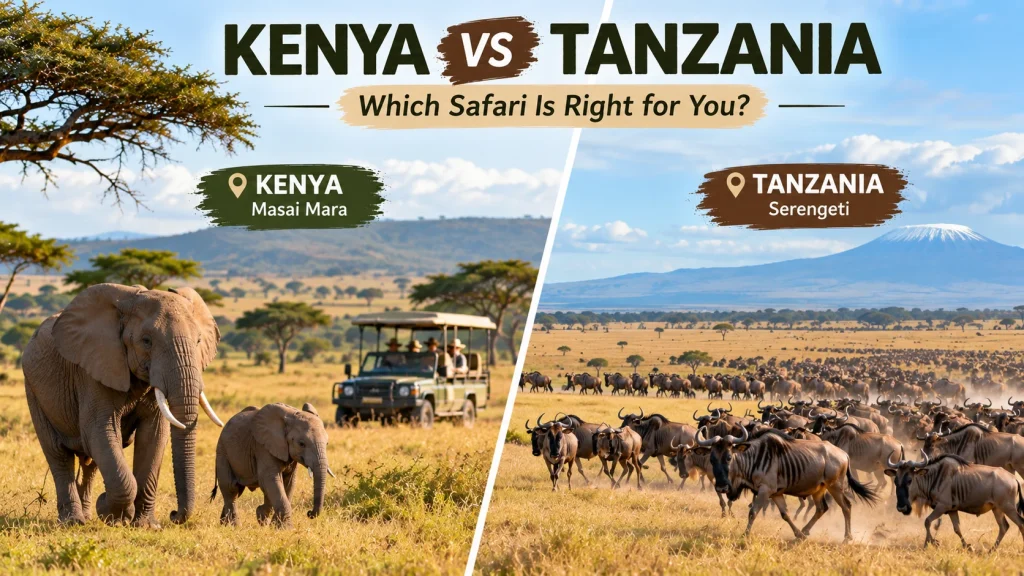
Choose Kenya for a shorter, easier trip, strong big-cat viewing, the Mara River crossings from July to October, and the chance to add a beach. Choose Tanzania for the Serengeti’s scale, the Ngorongoro Crater, calving season from January to March, and quieter, more remote parks. Neither is better overall. They share one ecosystem and one migration, so the right answer depends on when you travel, how many days you have, and your budget. With 10 days or more, doing both is often the best option.
Every week someone asks us the same question: Kenya or Tanzania? It’s a fair question, and a slightly awkward one for us, because we’re a Kenyan, Maasai-owned company. So here is how we’ve tried to keep this honest. We’ve used current 2026 figures instead of impressions, we say plainly where Tanzania comes out ahead, and we arrange Tanzania safaris ourselves, so we have no reason to push you toward one side of the border.
The first thing to know about Kenya vs Tanzania is that it isn’t a contest between a good safari and a bad one. Both have the Big Five and both have the Great Migration. The Masai Mara in Kenya and the Serengeti in Tanzania are even one connected ecosystem, split by a border that the animals ignore. What differs is the shape of the trip: the distances, the landscapes, the costs, and the months when each country shines. (People search for this as both Kenya vs Tanzania and Tanzania vs Kenya, and the answer is the same either way.)
Kenya vs Tanzania at a Glance
| Kenya | Tanzania | |
| Best known for | Masai Mara big cats and Mara River crossings, Amboseli elephants with Kilimanjaro views | The Serengeti’s vast plains, the Ngorongoro Crater, calving season |
| Great Migration | Mara River crossings, roughly July to October, peaking in August and September | Calving January to March, Grumeti River crossings June to July, Mara River crossings from the north, July to October |
| Scale | Masai Mara reserve: about 1,510 km² | Serengeti: about 14,750 km² |
| Park fee, adult, per day (2026) | Masai Mara US$100 (Jan to Jun) or US$200 (Jul to Dec); Amboseli US$90; Tsavo US$80 | Serengeti about US$82.60 (peak); Ngorongoro about US$70.80 plus US$295 per vehicle for the crater; Tarangire about US$59 |
| Getting there | Fly into Nairobi. The Mara is 5 to 6 hours by road or about 45 minutes by air | Fly into Kilimanjaro (JRO) near Arusha for the northern circuit, then long road days or charter flights between parks |
| Entry document | eTA, about US$30 to US$35 | Visa, US$50 (US$100 for US citizens) |
| Beach add-on | Diani, Watamu, Malindi | Zanzibar |
| Mountain | Mount Kenya | Kilimanjaro |
Fees and prices change, and sources differ slightly on Tanzania’s rates, so treat the numbers above as a guide and confirm them when you book.
Kenya vs Tanzania: Where to See the Great Migration
This is the question underneath most Kenya vs Tanzania decisions, and the answer surprises people: it’s one migration, and the herds spend time in both countries. Roughly 1.5 million wildebeest circle the ecosystem through the year, following rain and fresh grass, so where you should go depends entirely on the month.
| Months | Where the herds are | Where to go |
| January to March | Southern Serengeti and the Ndutu plains: calving season, with heavy predator activity | Tanzania |
| April to May | Central and western Serengeti, moving north as the long rains ease | Tanzania (green, quiet, lower prices) |
| June to July | Western corridor: the Grumeti River crossings, with fewer vehicles than the Mara River | Tanzania |
| July to October | Northern Serengeti and the Masai Mara: the Mara River crossings, peaking in August and September | Kenya or northern Tanzania |
| November to December | Herds turn south again as the short rains return | Either; Tanzania’s south for the return |
The famous Mara River crossings happen on the border itself, and herds cross back and forth, so you can watch them from the Kenyan side in the Masai Mara or the Tanzanian side in the northern Serengeti. The Mara side is easier to reach from Nairobi and has private conservancies that limit vehicle numbers at sightings. The northern Serengeti is more remote. Whichever side you choose, crossings are never guaranteed, because the herds decide when and where to cross.
If calving season is what you want, that’s Tanzania, and it’s one of the most underrated windows in safari travel. For the full breakdown of the two reserves themselves, see our comparison of the Masai Mara and the Serengeti.
Read next: Masai Mara vs Serengeti: Which Should You Actually Choose?
Kenya vs Tanzania: Wildlife and Landscapes
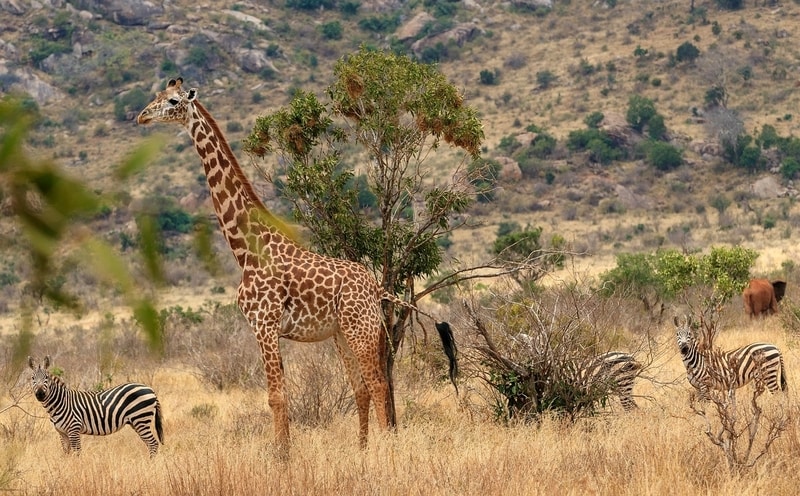
Both countries deliver the Big Five and exceptional game viewing. The difference is in what each does best.
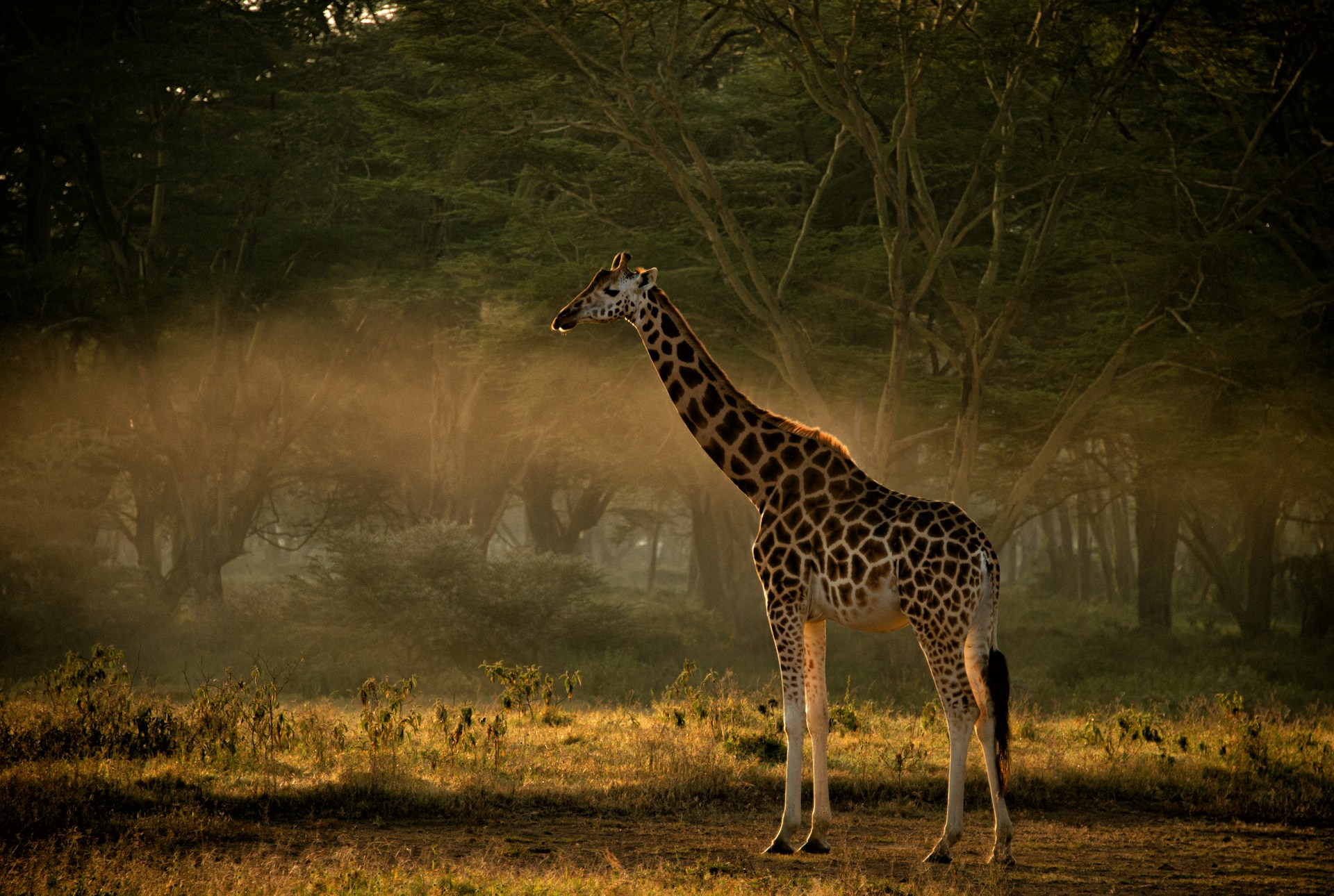
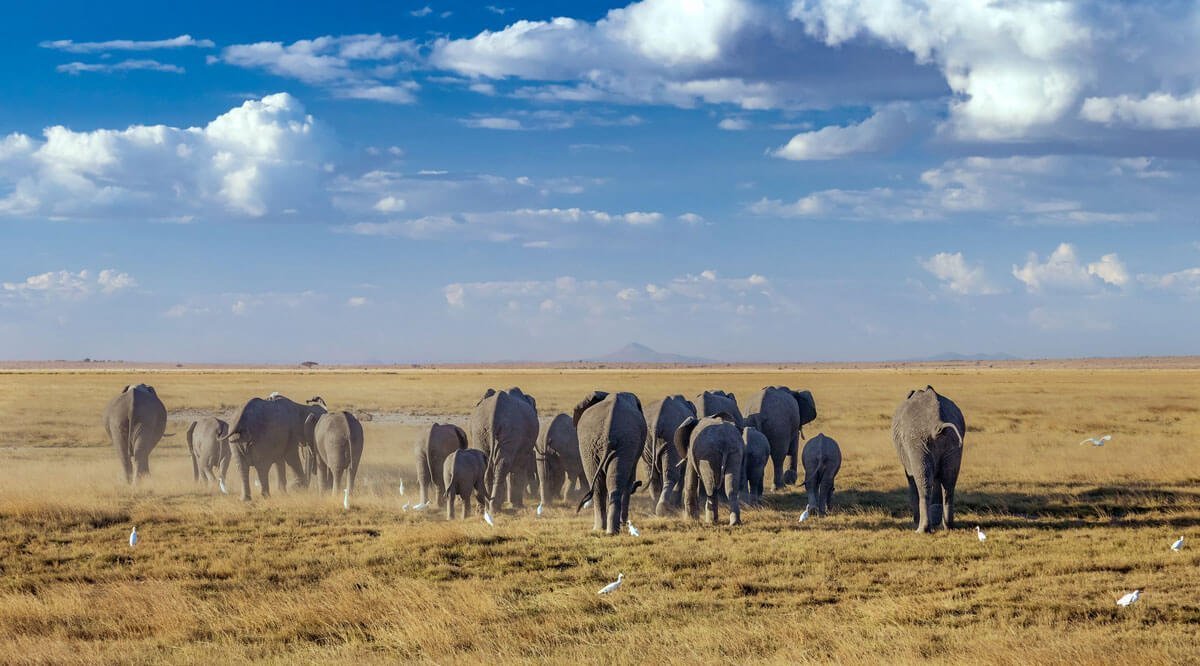
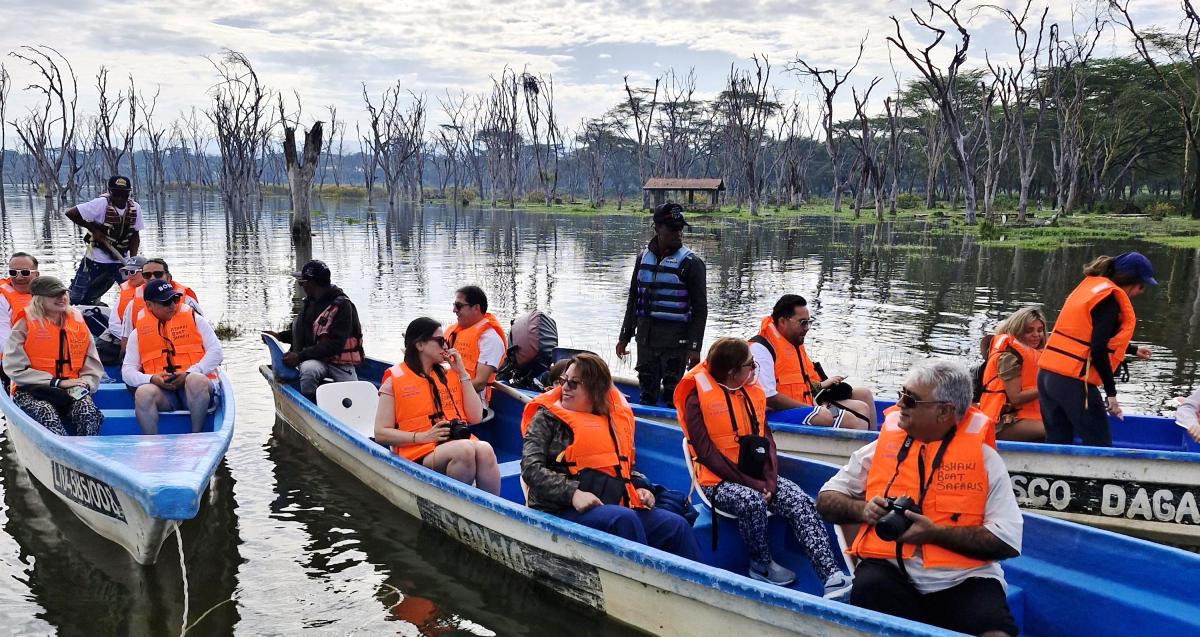
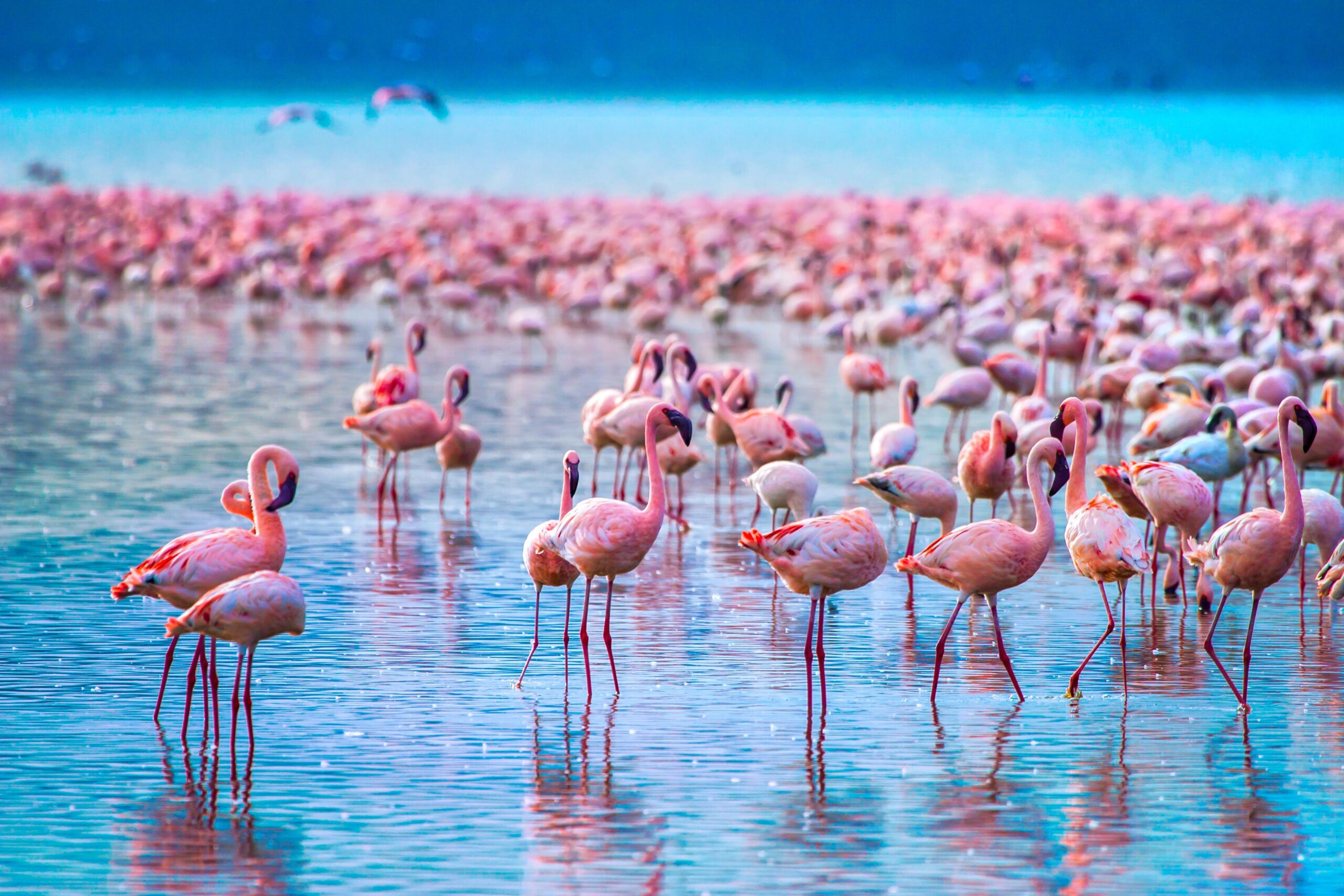
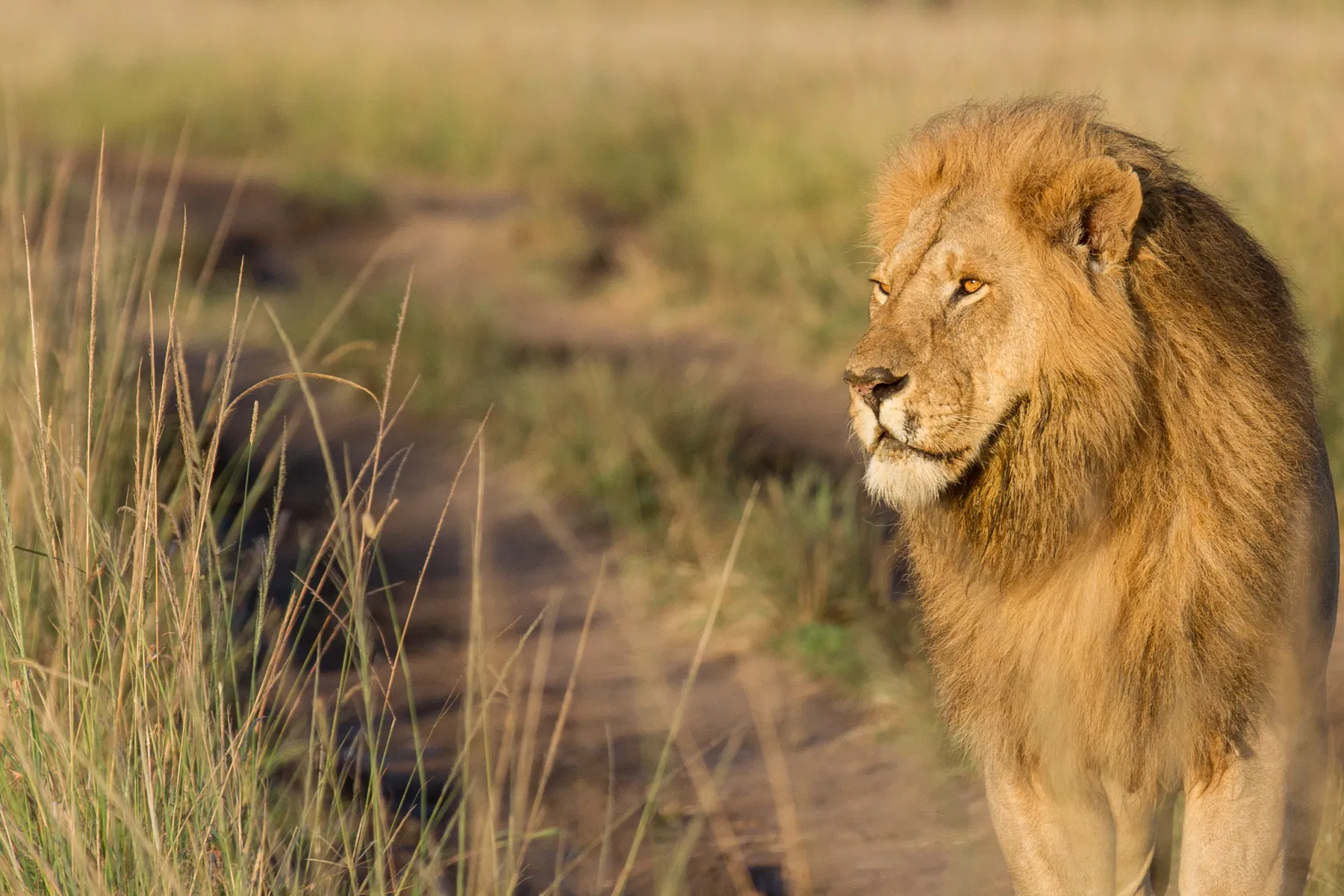
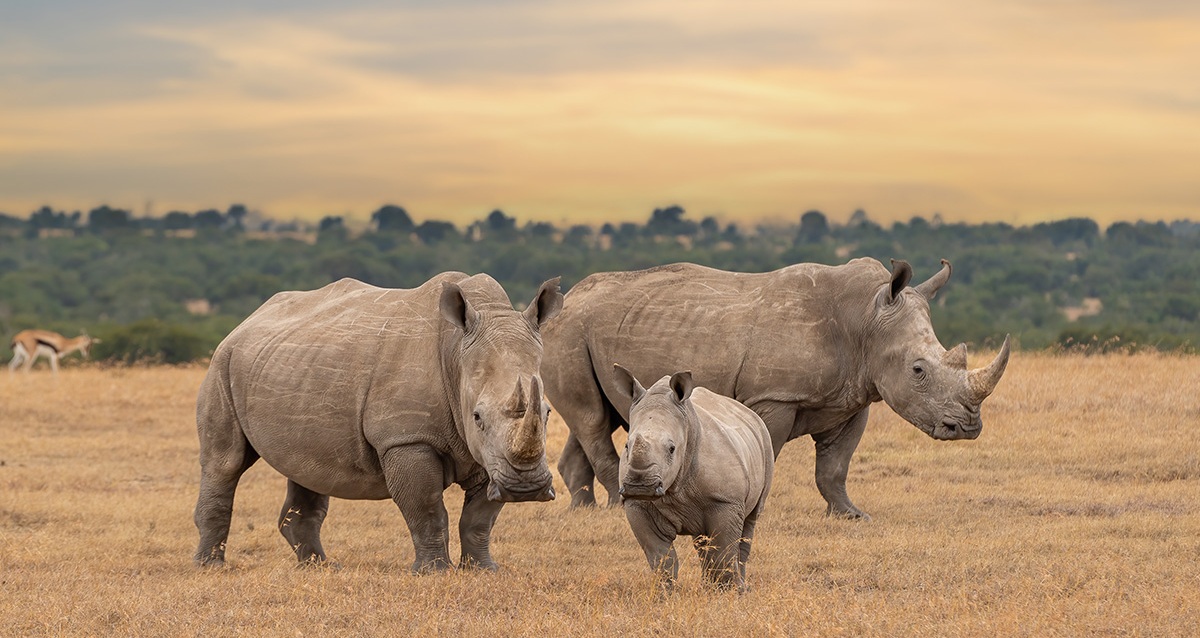
What Kenya does best. Kenya is compact, and its parks are very different from one another. The Masai Mara is famous for big cats and open plains. Amboseli is known for large elephant herds under Mount Kilimanjaro. Samburu, in the north, is home to the Samburu Special Five, species found in very few other places in Kenya. Ol Pejeta is the only place in Kenya to see chimpanzees and shelters the last two northern white rhinos on Earth. Lake Nakuru is a strong rhino and birdlife stop.
Kenya’s quiet advantage: conservancies. The private conservancies around the Masai Mara are leased from Maasai landowners and strictly limit vehicles. Unlike the main reserve, many of them allow night drives and walking safaris. If you want a quieter, more personal safari, this is one of Kenya’s biggest strengths.
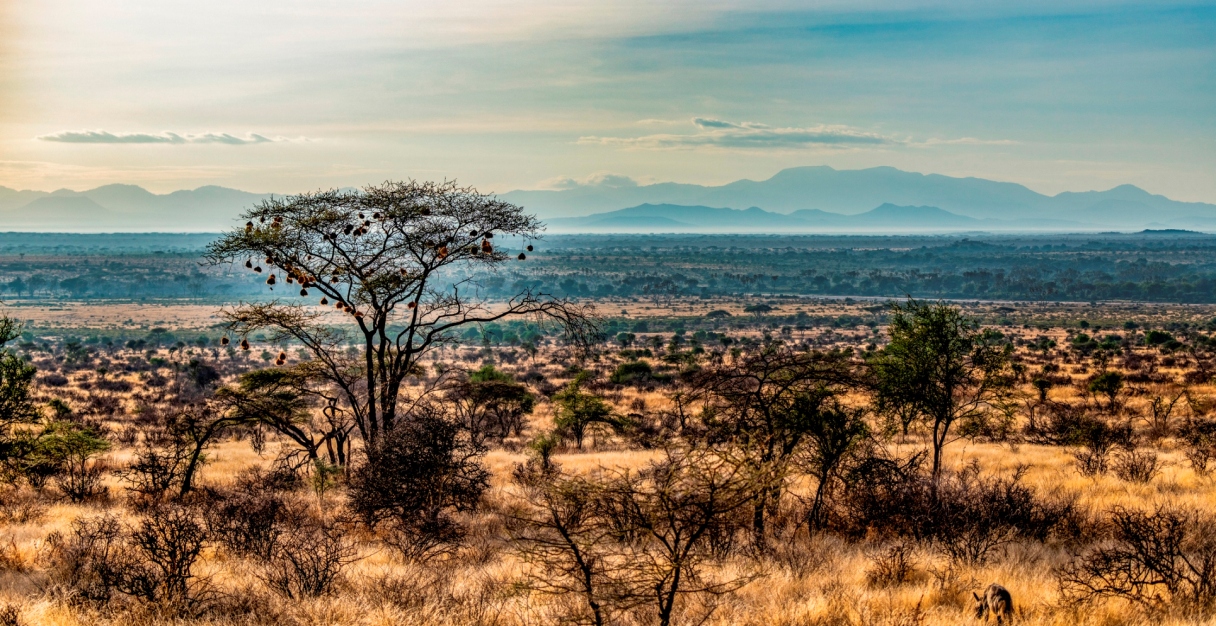
What Tanzania does best. Tanzania is bigger and wilder in feel. The Serengeti covers about 14,750 square kilometres, nearly ten times the Masai Mara reserve, so it’s easier to find stretches where you see few other vehicles. The Ngorongoro Crater, a volcanic caldera roughly 600 metres deep and about 20 kilometres across, packs some of the densest wildlife on the continent into one contained landscape. Tarangire is known for big elephant herds and baobab trees, and the southern and western parks are more remote still.
Want the detail on each Kenyan park? Our complete guide to Kenya’s national parks covers all of them, including fees and the best time to visit.
Kenya vs Tanzania Safari Costs
Most guides say Tanzania is the expensive one. The park fees tell a more interesting story. In peak season, the Masai Mara actually charges more per day than the Serengeti.
| Park | Adult fee per day | Notes |
| Masai Mara (Kenya) | US$100 (Jan to Jun) or US$200 (Jul to Dec) | Fee jumps in peak migration season |
| Amboseli (Kenya) | US$90 | KWS Premium park |
| Tsavo (Kenya) | US$80 | Same rate for Tsavo East and West |
| Serengeti (Tanzania) | About US$82.60 in high season, about US$70.80 in low season | Includes 18% VAT |
| Ngorongoro (Tanzania) | About US$70.80 | Plus about US$295 per vehicle to descend into the crater |
| Tarangire (Tanzania) | About US$59 | The cheapest of the northern circuit parks |
Here’s what that means in practice. Three days in the Masai Mara in August costs US$600 per person in park fees alone (3 x US$200). Three days in the Serengeti in the same month costs about US$248 (3 x US$82.60), before vehicle fees. Park fees are only one part of the bill, though. Tanzania adds the crater fee and often means a charter flight or a long road day between parks, which is where its costs build up.
Overall daily costs end up much closer than people expect. One 2026 Tanzania guide puts budget camping at about US$200 to US$300 per person per day, mid-range lodges at US$350 to US$600, and luxury tented camps at US$500 to US$1,500 or more. For Kenya, our own published packages are a fair reference: our 5-day migration safari runs from about US$2,000 to US$2,690 per person, or roughly US$400 to US$540 a day, and our 8-day circuit ranges from US$1,900 to US$3,800 depending on group size and season.
So in the Tanzania vs Kenya cost question, the honest answer is that mid-range prices overlap, Tanzania’s top end is higher, and Kenya is usually the easier country to do on a shorter or tighter budget, because the parks are closer to Nairobi and there are more budget camping options. Don’t choose by park fee alone. Choose by season, trip length and travel style.
For a full Kenyan price breakdown, see Kenya Safari Costs Explained, and remember to budget for tips with our Kenya safari tipping guide.
Getting There, Entry Rules and Safety
Getting there. Kenya’s parks fan out from Nairobi, and the Masai Mara is 5 to 6 hours by road or about 45 minutes by air. Tanzania’s northern circuit is reached through Kilimanjaro International Airport (JRO) near Arusha, with Dar es Salaam and Zanzibar as other gateways. From there, the parks are spread out, so trips involve longer road days or charter flights.
Entry. Kenya requires an eTA, which costs about US$30 to US$35 and should be applied for online before you travel. Tanzania charges US$50 for most nationalities and US$100 for US citizens, and you can apply online or, at major airports, often on arrival. The East Africa Tourist Visa covers Kenya, Uganda and Rwanda, but most sources say it does not include Tanzania, so a trip to both countries needs both entry documents. Rules, including insurance requirements, are being updated in both countries, so check the official pages before you book.
Safety. Both countries have been in the news. The U.S. State Department renewed Kenya at Level 2, “Exercise Increased Caution,” on July 28, 2026. Tanzania was raised to Level 3, “Reconsider Travel,” on October 31, 2025 after post-election unrest, and was reported lowered to Level 2 on October 16, 2026. Check the State Department and your own government’s advisory on the day you book, because levels change. In both countries, the areas named in the advisories, such as parts of Marsabit, Turkana and West Pokot in Kenya and the Mtwara region in Tanzania, are far from the main safari circuits, and guided safari travel inside the parks is the most structured way to visit. Malaria is a risk in both, so see a travel clinic well before you fly.
Tanzania vs Kenya by Month: When to Go Where
| When you travel | Best pick | Why |
| January to March | Tanzania | Calving season on the Ndutu plains; Kenya is also quiet, with lower prices and a lower Mara fee |
| April to May | Either | Long rains, green landscapes, the fewest visitors and the lowest prices |
| June | Tanzania | Grumeti River crossings and the start of the dry season |
| July to October | Kenya or northern Tanzania | Mara River crossings; peak demand, so book months ahead |
| November to December | Either | Short rains, and the herds heading south |
For temperatures, rainfall and what to pack in each season, see Kenya Weather by Season.
So, Kenya or Tanzania? A Simple Way to Decide
Choose Kenya if: you have 3 to 7 days or want shorter transfers; it’s your first safari; you want the Mara River crossings in August or September; you’d like night drives or walking safaris in a private conservancy; you want to finish on a beach at Diani or Watamu; or you want Amboseli’s Kilimanjaro views.
Choose Tanzania if: you have 10 days or more; you want to see the calving season; the Ngorongoro Crater is on your list; you prefer a vast, remote feel; or you plan to add Kilimanjaro or Zanzibar.
Do both if: you have 10 to 14 days and want to follow the migration across the border. Since it’s one ecosystem, a combined trip lets you see two sides of the same story. Expect two entry documents, two sets of park fees and a cross-border transfer, which is where an operator who knows both sides earns its keep.
We build combined trips regularly. See our Kenya and Tanzania safaris, including the 6-day Masai Mara, Serengeti and Ngorongoro migration safari and the 9-day Kenya and Tanzania budget safari.
A fair question is whether a Kenyan company can run a good Tanzania safari. One guest who booked our 4-day Serengeti and Ngorongoro safari in January 2026 mentioned on TripAdvisor that although we’re a Kenyan operator, the Tanzania part ran smoothly. We’d rather you judge us on reviews like that than on our claims.
Frequently Asked Questions
Is Kenya or Tanzania better for a safari?
Neither is better overall. Kenya suits shorter trips, big cats, the Mara River crossings in August and September, and beach add-ons. Tanzania suits longer trips, the Ngorongoro Crater, calving season from January to March, and a more remote feel.
Which is cheaper, Kenya or Tanzania?
It depends on the month and style of trip. Park fees are lower in the Serengeti (about US$82.60) than in the Masai Mara in peak season (US$200), but Tanzania adds a US$295 per-vehicle crater fee and more transfers. Mid-range daily costs overlap, and Tanzania’s luxury end is higher.
Tanzania vs Kenya: which is better for a first safari?
Kenya is usually easier for a first trip of a week or less, because the Masai Mara is close to Nairobi and distances are shorter. With 10 days or more, Tanzania or a combined trip works well too.
Where is the best place to see the Great Migration, Kenya or Tanzania?
It depends on the month. Calving is in southern Tanzania from January to March, Grumeti River crossings are in Tanzania in June and July, and Mara River crossings happen from July to October on the Kenya-Tanzania border, viewable from either side.
Can you visit Kenya and Tanzania in one trip?
Yes. They share the same ecosystem, and combined itineraries typically pair the Masai Mara with the Serengeti and Ngorongoro. You’ll need an entry document and park fees for each country.
Do I need separate visas for Kenya and Tanzania?
Yes. Kenya uses an eTA of about US$30 to US$35, and Tanzania uses a visa of US$50 (US$100 for US citizens). The East Africa Tourist Visa does not include Tanzania, according to most sources.
Is Kenya vs Tanzania a safety question?
Not for the main safari circuits. Both countries have advisories that focus on specific cities and border regions far from the parks, and guided safari travel is well established in both. Check current advisories before you book.
When is the best time to visit Kenya vs Tanzania?
July to October is best for the Mara River crossings, January to March for calving in Tanzania, and April to May for the quietest, lowest-priced trips in either country.
Plan Your Kenya or Tanzania Safari With Us
Tell us your dates, your group and your budget, and we’ll tell you honestly which country fits, or whether doing both makes sense. Browse our Masai Mara safari packages or get in touch and one of our Maasai guides will help you decide.